

How Order Volume Impacts Unit Price for Bulk Insulated Drinkware
When sourcing bulk insulated drinkware (like tumblers, water bottles, or coffee mugs) for businesses, events, or promotions, understanding the relationship between order volume and unit price is critical to maximizing value. Let’s break down how quantity impacts cost—and how to leverage this for smarter purchasing.
1. Economies of Scale: The Core Relationship
At the heart of order volume’s impact on unit price is economies of scale—the principle that as production (or procurement) volume increases, the per-unit cost decreases. Here’s why:
- Fixed Cost Allocation: Costs like tooling for custom designs, setup fees, or administrative work are spread across more units. For example, a $500 mold fee for a custom logo on drinkware costs $5 per unit for 100 units but only $1 per unit for 500 units.
- Production Efficiency: Larger orders allow manufacturers to optimize production runs (e.g., fewer machine setups, streamlined labor) and reduce waste, lowering variable costs (materials, labor per unit).
- Raw Material Discounts: Suppliers often offer bulk discounts on materials (stainless steel, insulation foam, plastics) when ordered in larger quantities, passing savings to buyers.
2. Supplier Pricing Models: Tiered, Volume-Based, and Beyond
Most suppliers of bulk insulated drinkware use tiered pricing structures to incentivize larger orders. Here’s how these models work:
- Tiered Pricing: Units are priced in “tiers”—e.g., 1–100 units at $15 each, 101–500 at $12 each, 501+ at $9 each. The more you buy, the lower the per-unit cost.
- Volume Discounts: A flat discount for exceeding a minimum order (e.g., “20% off for orders over 1,000 units”).
- Custom Pricing for Large Orders: For massive orders (e.g., 10,000+ units), suppliers may negotiate bespoke pricing, factoring in long-term partnerships or exclusive contracts.
3. Other Factors That Interact With Order Volume
While order volume is a primary driver, other variables influence the final unit price. Be aware of these when planning your purchase:
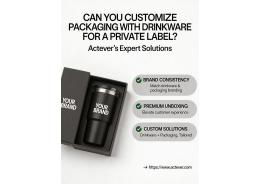
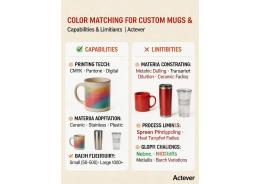
- Customization Complexity: Adding logos, colors, or unique designs may reduce the cost benefits of volume if setup fees or labor-intensive customization isn’t scaled. However, some suppliers waive customization fees for large orders.
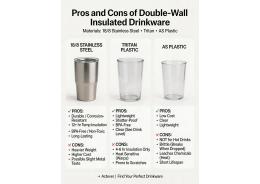
- Material Quality: Higher-grade materials (e.g., food-safe stainless steel, premium insulation) have higher base costs, but volume discounts still apply—so the percentage savings may remain consistent.
- Shipping & Logistics: Larger orders may incur higher upfront shipping costs but lower per-unit shipping costs (e.g., a $500 freight fee for 100 units is $5/unit; for 1,000 units, it’s $0.50/unit).
4. Practical Tips for Buyers
To optimize your bulk insulated drinkware purchase, consider these strategies:
- Consolidate Orders: Combine orders across departments or events to reach a higher volume tier.
- Negotiate Long-Term Contracts: Suppliers may offer better pricing for repeat or multi-year orders.
- Test with Smaller Orders First: For new designs or suppliers, order a small batch to verify quality, then scale up.
- Leverage Group Purchasing: Partner with other businesses to reach higher volume thresholds (e.g., industry associations or co-ops).
By understanding how order volume shapes unit price, you can balance quantity, quality, and budget to get the best value from your bulk insulated drinkware investment.
Ready to explore bulk insulated drinkware options? Contact Actever to discuss your volume and customization needs!

 English
 German
 French
 Russian
 Spanish
 Japanese
 Korean
 Khmer
Khmer Portuguese
 Ukrainian
 Arabic